


| Feature | Casement | Double-Hung | Slider |
|---|---|---|---|
| Ventilation | Full opening, catches side breezes | Half opening | Half opening |
| Air seal | Compression seal, tightest of the three | Weatherstrip at the meeting rail | Brush seal on track |
| Cleaning | Reach both sides from inside | Tilt the sashes in | Lift out or reach outside |
| Maintenance | Crank hardware and hinges | Balances and locks | Track grit, roller wear |
| Best for | Kitchen sinks, high walls, egress | Bedrooms, traditional exteriors | Wide openings along walkways |


Anlin, Andersen, Western, and ProVia all build strong casement lines, but the glass package and the installer matter more than the badge on the frame. A top-tier window installed badly still leaks. Book an expert casement window installation today.
Vinyl works best for most Arizona homes. It resists heat transfer, holds up under the desert sun, and costs the least. Composite comes second. It handles extreme temperature swings without warping and gives you a stronger frame for larger casement sashes. Aluminum casement windows conduct heat, so we recommend it ONLY when you need narrow sightlines or a commercial look.
Only two. One, the sash swings outward, so it needs clear space and won't suit a spot right beside a narrow walkway. Two, if you need very wide openings, it’s better to get sliders, since casement sashes get heavier as they widen.
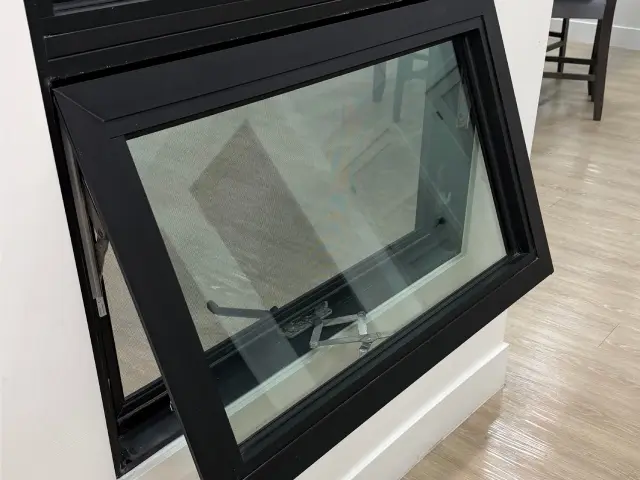
Casement windows are best for operable styles. The sash clamps into the frame on all four sides, so they leak less air than sliding types. Awning windows are also great because they seal the same way, but they’re better for smaller openings.